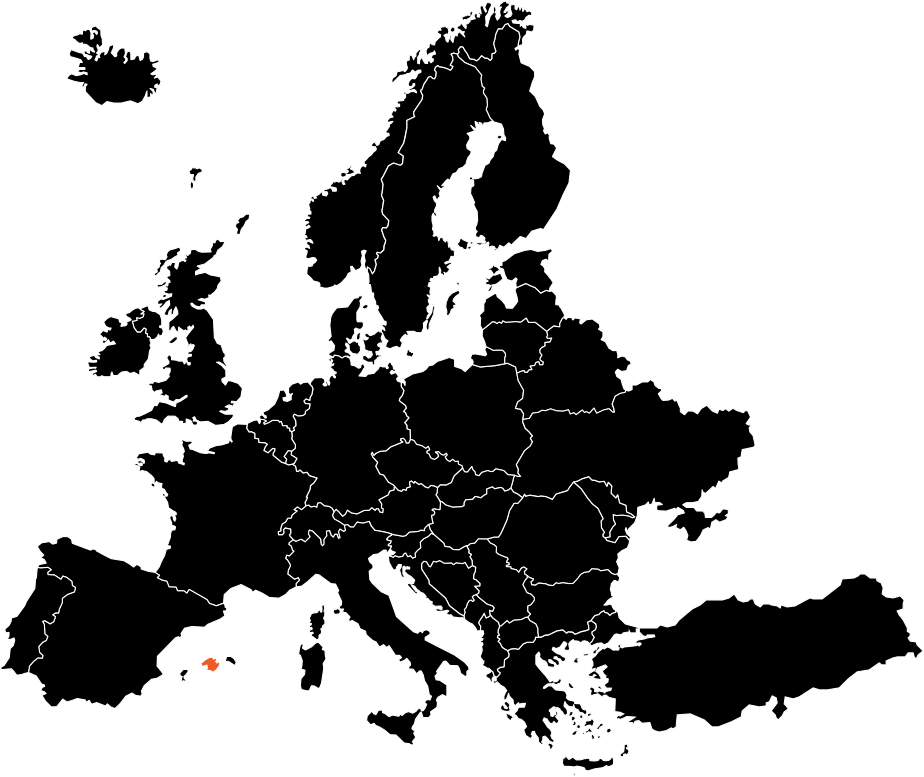

How about discovering Majorca far from the crowds and postcard clichés?
The GR221, known as the Dry Stone Route (Ruta de la pedra en sec), takes you into the heart of a secret and authentic island, shaped by centuries of history and tradition.
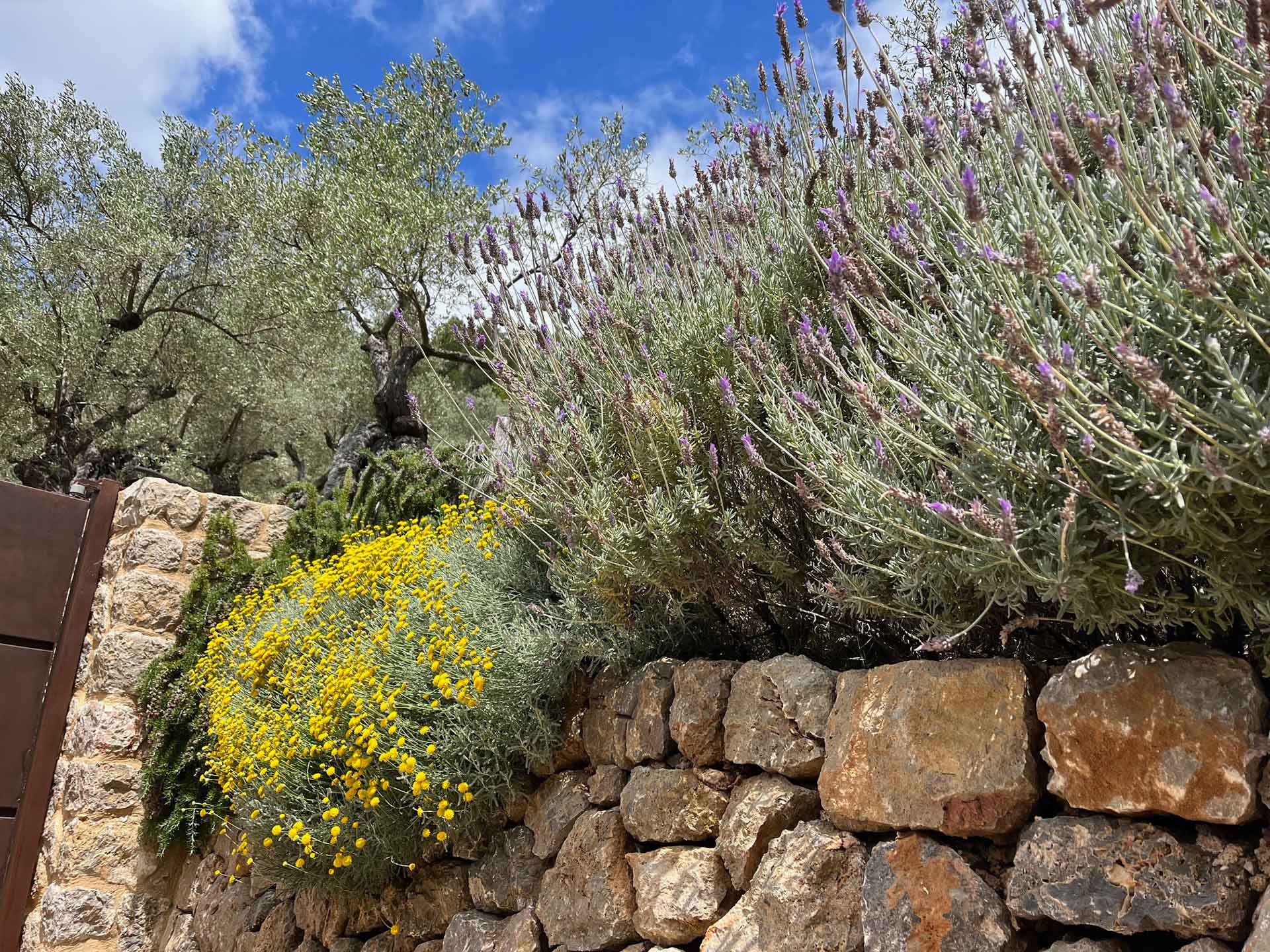
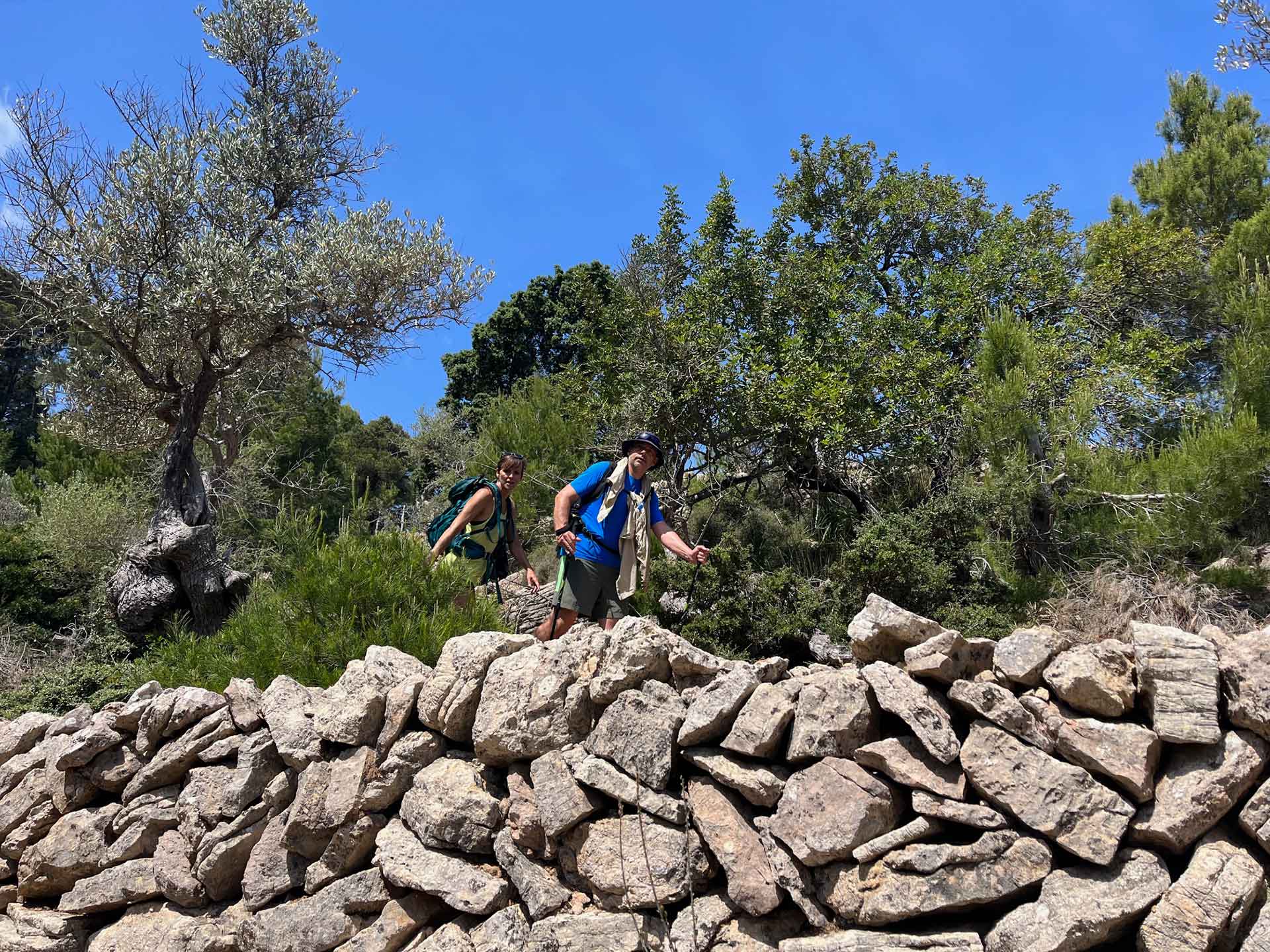
Here, the stones speak. Hand-cut and carefully fitted together without mortar, they form paths, terraces, and walls that guide your steps along the trail—an open-air masterpiece and a living testimony to ancestral craftsmanship.
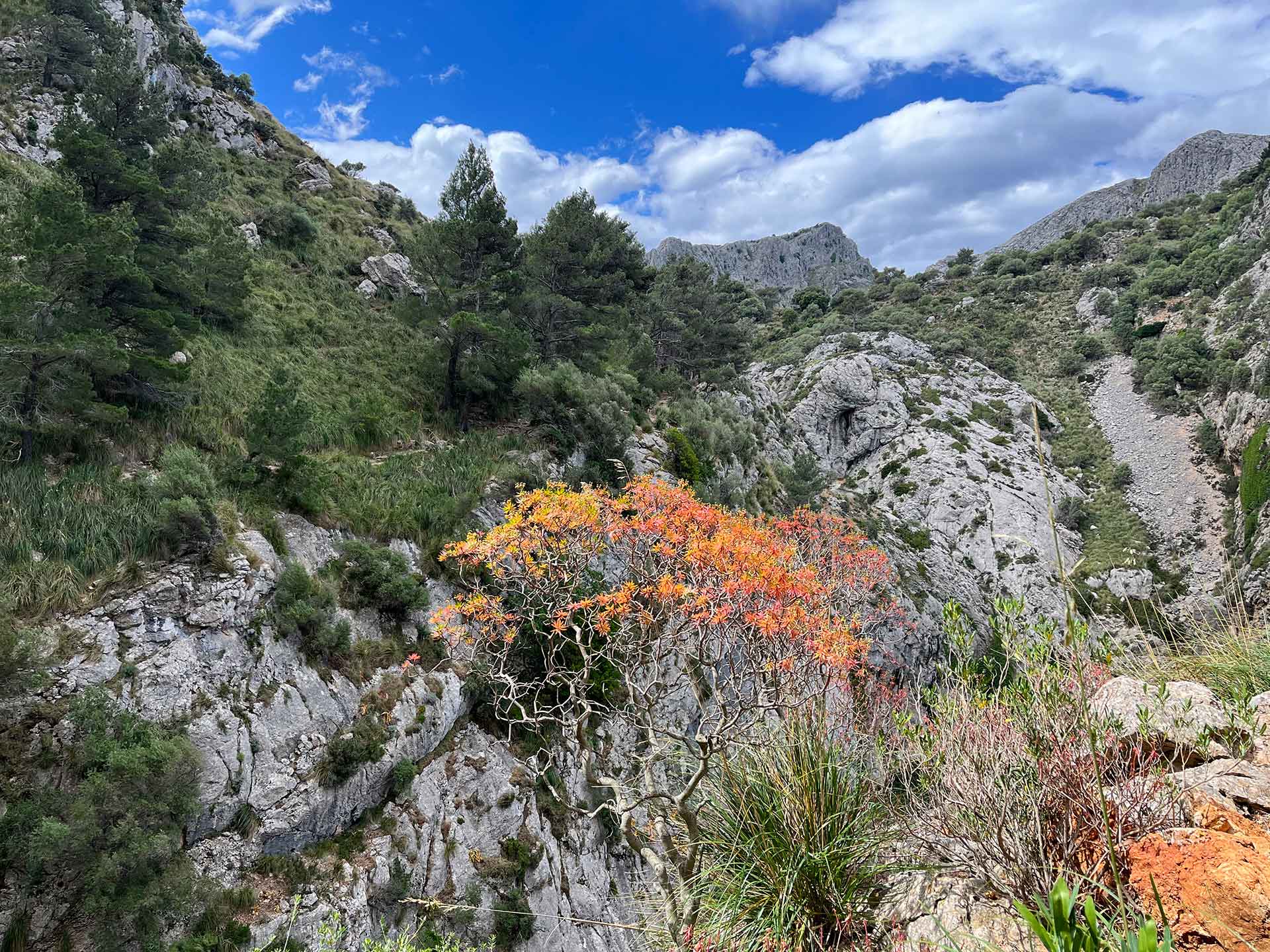
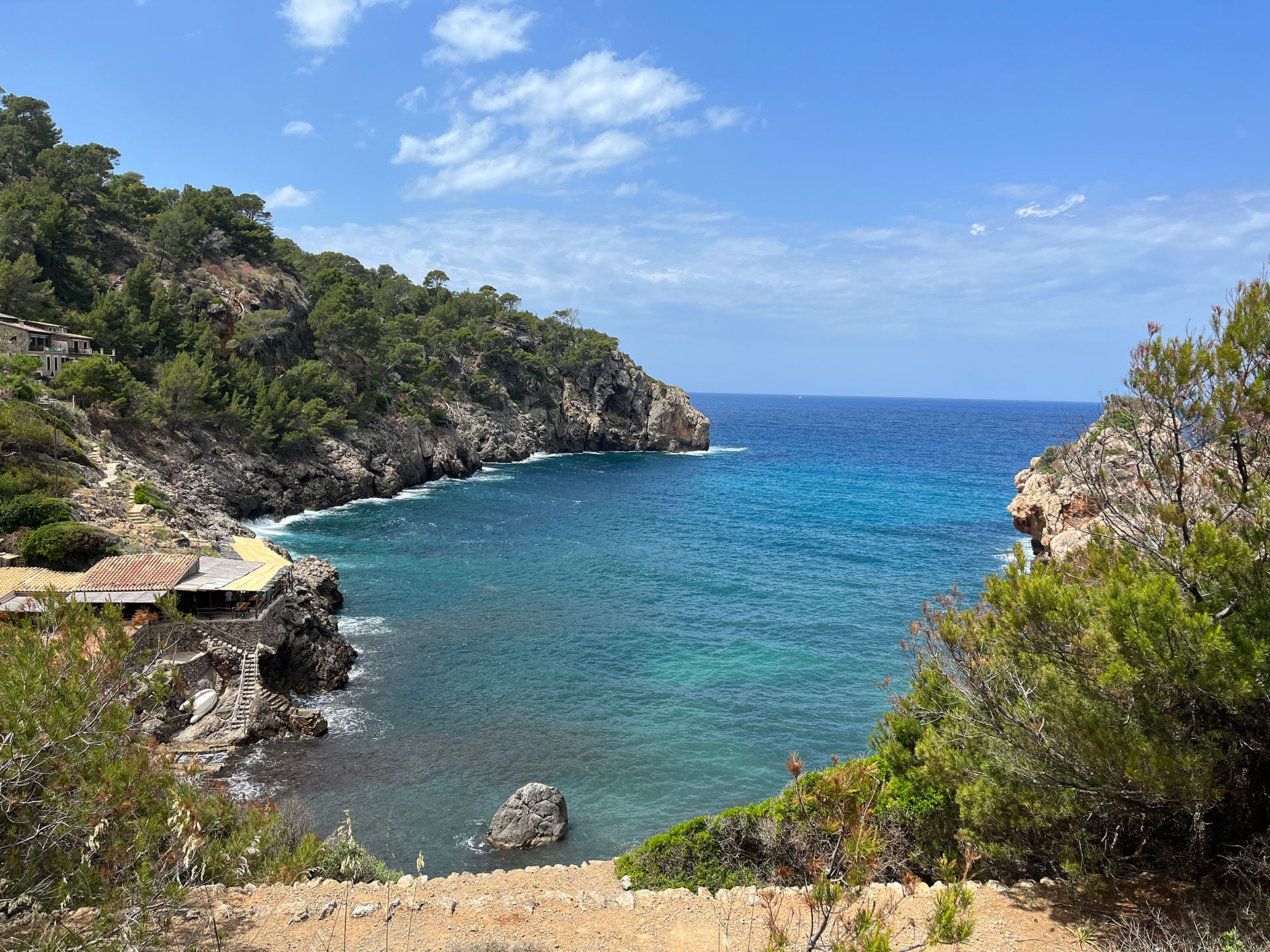
Stretching nearly 283 kilometers, the GR221 crosses the majestic Serra de Tramuntana, listed as a UNESCO World Heritage Site. As you hike, you’ll move from the cool shade of Mediterranean forests to sun-drenched ridgelines, from dramatic cliffs plunging into turquoise seas to thyme- and rosemary-scented scrublands. Along the way, you’ll discover ocher-stone villages, remote fincas, and breathtaking viewpoints.
Every stage is a promise of wonder: preserved landscapes, rich endemic flora and fauna, and the spirit of an island proud of its traditions.
The Dry Stone Route is more than just a hiking trail—it’s a sensory journey, an immersion into the authentic, wild, and unforgettable Majorca, far from crowded beaches and mass tourism.
Palma de Mallorca
The island’s vibrant capital, Palma charms with its medieval old town, dominated by the stunning Gothic cathedral La Seu overlooking the sea. Palaces, hidden courtyards, and lively markets reflect a rich past blending Arab, Jewish, and Christian influences. A city where culture, gastronomy, and Mediterranean lifestyle come together.
Banyalbufar
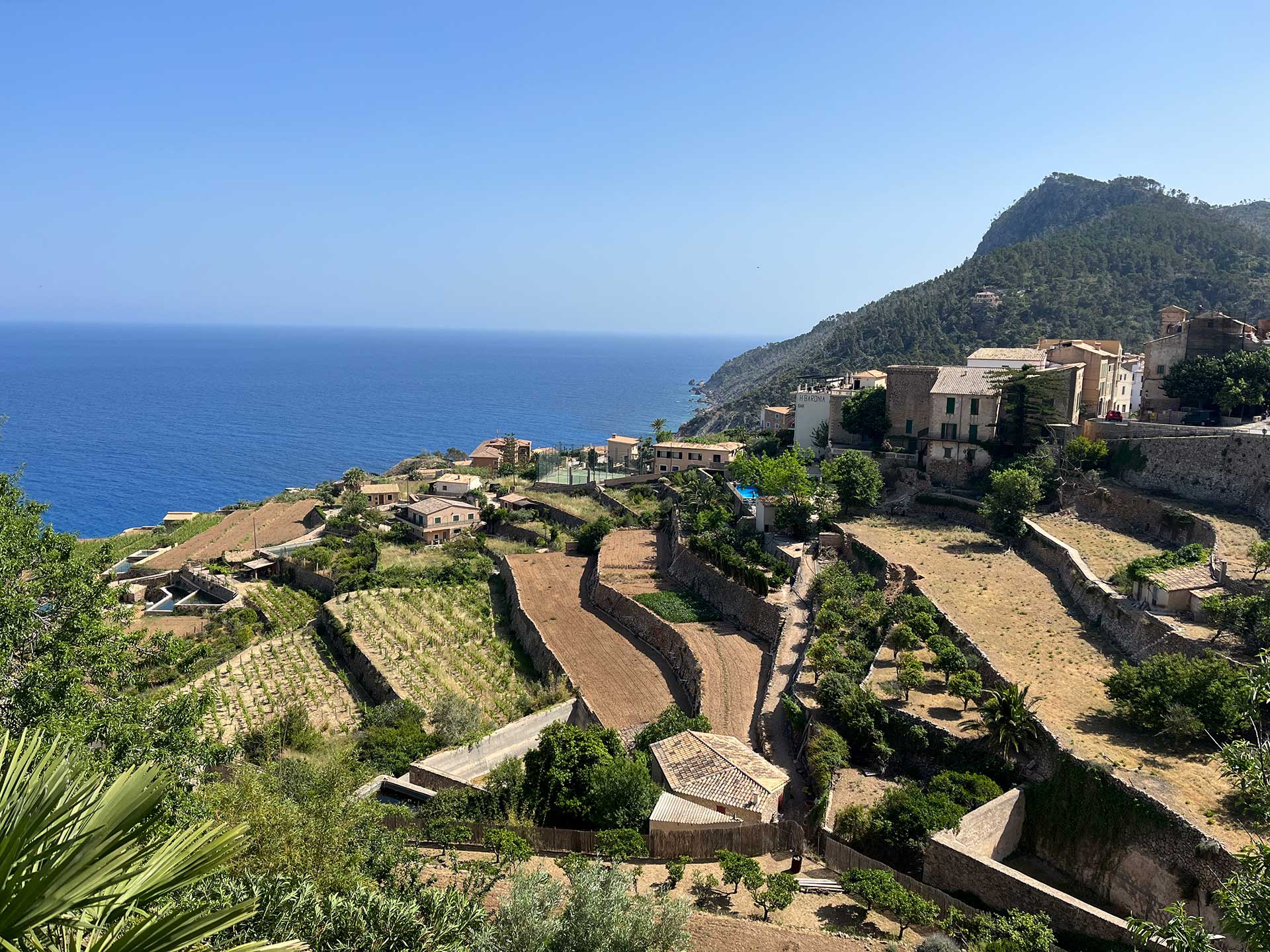
A picturesque village clinging to the mountainside, Banyalbufar is famous for its dry stone terraces cascading down toward the sea. Once a hub of Majorcan viticulture, today it offers striking views over the rugged coastline and some of the island’s most unforgettable sunsets.
Valldemossa
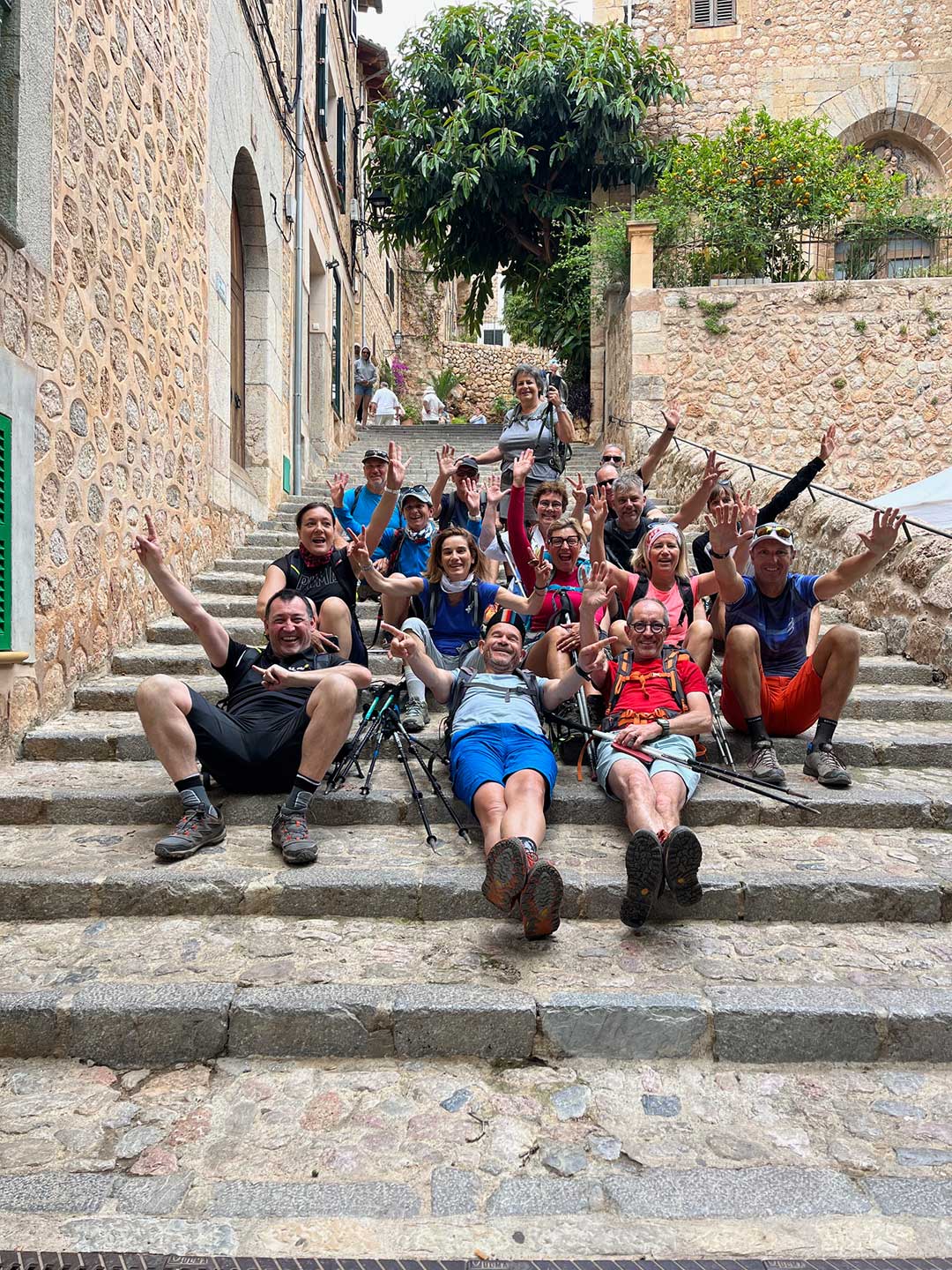
Perched at 1,300 feet (400 m) in the Tramuntana mountains, Valldemossa is arguably Majorca’s most iconic village. Its cobbled streets lined with flower-filled houses and its Royal Carthusian Monastery—where Chopin once stayed—create a uniquely enchanting atmosphere. A place of heritage, music, and timeless charm.
Deià
The bohemian jewel of the Tramuntana, Deià has attracted artists and dreamers for decades. With its golden-stone houses scattered across lush hillsides and sweeping views over the Mediterranean, it combines chic allure with authentic charm. Between galleries, artists’ studios, and hidden coves, Deià embodies Majorca’s laid-back elegance.
Sóller
Encircled by mountains and fragrant orange groves, Sóller is a true oasis in the Tramuntana. Its lively center, adorned with modernist architecture, recalls its prosperous trading past. Linked to Palma by a vintage wooden train, the town opens onto the charming Port de Sóller, a perfect blend of maritime tradition and seaside relaxation.
Lluc
In the heart of the mountains, Lluc is Majorca’s spiritual center. Its monastery, a revered pilgrimage site, houses the statue of the Moreneta, the Black Madonna, patron saint of the island. Surrounded by hiking trails and pristine nature, Lluc is a place of peace, contemplation, and deep connection to the Tramuntana.
This trip is rated moderate to moderately challenging on certain stages. Expect 4–6 hours of hiking daily on rocky terrain. Trails are generally well-maintained, though some sections require careful footing.
A good fitness level is required. Sturdy hiking shoes are essential (trail running shoes are acceptable). Trekking poles are recommended.
You’ll carry only a light daypack with essentials (camera, water, snacks, extra layers, etc.), except on Day 6 (overnight at Tossals Verds refuge) when luggage transport is not available.
Each day features a delicious picnic made with local products.
Transfers during the trek include:
Esporles – Valldemossa
Llucalcari – Port de Sóller (optional)
Lluc – Port of Pollença
Port of Pollença – Palma
Boat transfer: Cala Tuent – Port de Sóller
Note: airport–Palma and Palma–airport transfers are not included.
LUGGAGE
Your luggage is transported by vehicle between accommodations, except for the refuge overnight.
Comfortable hotels, with one night in a traditional mountain refuge.
Single rooms available on request only (limited capacity in certain areas).
Drinking water is available everywhere, with bottled water for sale in local shops.
Quality local cuisine is provided.
Included meals:
Breakfast (B): coffee/tea, juice, bread, butter, jam, eggs, yogurt, fruit (depending on accommodation).
Picnic lunch (L): prepared daily with fresh, local ingredients.
Dinner (D): served at hotels or local restaurants, including starter, main course, and dessert.
Note: beverages not included.
Day 1: Arrival in Port d’Andratx
Arrival at Palma de Mallorca, then transfer on your own (approx. 40 min) to our hotel in Port d’Andratx, a charming fishing port and elegant seaside town on the southwest coast.
Group welcome, dinner, and overnight stay at the hotel.
Day 2: Port d’Andratx – Sant Elm – Sa Gramola – Estellencs
We start with a gentle walk along the waterfront, gradually ascending through hillside villas. The real hike begins in the Tramuntana forests, on classic rocky mountain trails with aromatic shrubs and breathtaking emerald sea views.
Stop at Sant Elm, once the landing point for the Catalan expedition that conquered Mallorca in 1229. Then we climb to the former La Trapa Monastery, perched above the uninhabited island of Sa Dragonera, a protected natural park famously occupied by environmentalists in 1977 to prevent a development project.
The coastal trail offers stunning panoramas over the island’s northern cliffs, culminating at the Sa Gramola mountain pass, the day’s endpoint.
Elevation gain: +950 m / -650 m (+3,117 ft / -2,133 ft) – Hiking time: 5–6 hrs – Distance: 18 km
Day 3: Estellencs – Esporles – Valldemossa
Today we walk along an ancient royal road, paved and lined with grand manor houses such as Son Serralta and Es Rafal.
The terraced village of Banyalbufar, with its historic homes and sea views, is a highlight. Its dry-stone terraces and dramatic coastline make it a memorable stop.
We continue along the last section of the Camí des Correu (1401), shaded by evergreen oaks, arriving in Esporles. Short transfer to Valldemossa, a stunning village famous for Chopin and George Sand, who spent the winter of 1838-1839 here.
Elevation gain: +700 m / -600 m (+2,297 ft / -1,969 ft) – Hiking time: 5 hrs – Distance: 14 km
Day 4: Valldemossa – Deià – Llucalcari – Port de Sóller
The day’s ascent leads to Caragolí (944 m), a rocky outcrop with panoramic views over Palma Bay and nearly the entire Tramuntana range. The trail was built by Archduke Louis Salvator of Austria in the 19th century.
A technical descent brings us to Deià, a village that has long inspired artists, writers, and musicians like Robert Graves. With its golden-stone houses clinging to the hillside, Deià is both charming and elegant.
We continue down to the romantic pebble bay Cala de Deià, then follow the coastal trail past Llucalcari to the Gros Lighthouse and Port de Sóller. (Optional: transfer by bus from Llucalcari.)
Elevation gain: +800 m / -950 m (+2,625 ft / -3,117 ft) – Hiking time: 5–6 hrs – Distance: 16 km
Day 5: Excursion to Cala Tuent
From the hotel, we climb through olive groves to a stunning cliffside trail. This classic hike reveals the pristine Cala Tuent, with crystal-clear waters perfect for a swim.
Return by boat to Port de Sóller, offering a unique perspective along the spectacular coastline we’ve explored.
Elevation gain: +800 m / -600 m (+2,625 ft / -1,969 ft ) – Hiking time: 5 hrs – Distance: 13 km
Day 6: Sóller – Barranc de Biniaraix – Tossals Verds Refuge
We take the historic tramway (bought from Lisbon) from Port de Sóller to Sóller village. After walking through the bustling streets and lush orange groves, we begin the ascent through spectacular gorges. We hike the Barranc de Biniaraix, an impressive stone path of 2,000 steps that has served local communities for centuries.
The Ofre Pass offers views of Cúber Reservoir and Puig Major (1436 m), the highest peak on the island (restricted military area).
The trail becomes more technical at Pas Llis, a narrow canyon section with a fixed rope. We spend the night at the traditional stone Tossals Verds Refuge, an isolated and magical mountain hideaway.
⚠️ No luggage access tonight.
Elevation gain: +1100 m / -600 m (+3,609 ft / -1,969 ft) – Hiking time: 6.5 hrs – Distance: 16 km
Day 7: Tossals Verds – Lluc – Port de Pollença
We explore the heart of the Tramuntana mountains, dominated by Puig de Massanella (1385 m), the island’s second-highest peak.
The route winds around the Tossals Verds massif, then climbs the shaded Prat Valley, dotted with springs and historic snow pits (Cases de Neu), used since 1564 to store ice during winter
From the Prat Pass (1205 m), the most motivated hikers can climb Puig de Massanella via a rocky trail, with spectacular views over Pollença and Alcúdia bays.
Descent to the Lluc Monastery, a 13th-century spiritual center of Mallorca. Transfer to Port de Pollença for the final night by the sea.
Elevation gain: +850 m / -900 m (+2,789 ft / -2,953 ft) – Hiking time: 5–6 hrs – Distance: 13 km
Day 8: Departure
Breakfast at the hotel and transfer to Palma Airport.
End of the adventure (or possibility to extend your stay on the island).
ℹ️ Note: For safety reasons (terrain, weather, or other factors), the guide may modify the itinerary.